
Online Database of Chemicals from Around the World
| Hefei TNJ Chemical Industry Co., Ltd. | China | |||
|---|---|---|---|---|
 | www.tnjchem.com | |||
 | +86 (551) 6541-8684 | |||
 | +86 (551) 6541-8697 | |||
 | sales@tnjchem.com | |||
| Chemical manufacturer since 2001 | ||||
| chemBlink Standard supplier since 2010 | ||||
| Shanghai Benrochem Chemcal Co., Ltd. | China | |||
|---|---|---|---|---|
| www.benrochem.com.cn | |||
| +86 13917534498 | |||
| +86 (21) 5217-8644 | |||
| johnszcn@hotmail.com | |||
| Chemical distributor | ||||
| chemBlink Standard supplier since 2010 | ||||
| Hangzhou TJM Chemical Co., Ltd. | China | |||
|---|---|---|---|---|
| www.tjmchem.com | |||
| +86 13388471767 | |||
| +86 (571) 8822-3279 | |||
| sales@tjmchem.com | |||
| Chemical manufacturer | ||||
| chemBlink Standard supplier since 2011 | ||||
| Hangzhou Leap Chem Co., Ltd. | China | |||
|---|---|---|---|---|
| www.leapchem.com | |||
| +86 (571) 8771-1850 | |||
| market19@leapchem.com | |||
 | QQ Chat | |||
| Chemical manufacturer since 2006 | ||||
| chemBlink Standard supplier since 2015 | ||||
| Changchun BC&HC Pharmaceutical Technology Co., Ltd. | China | |||
|---|---|---|---|---|
| www.bchc-china.com | |||
| +86 (431) 8087-1788 8087-1588 +86 15804318207 | |||
| +86 (431) 8841-7879 | |||
| 3468242165@qq.com | |||
| QQ Chat | |||
| Chemical manufacturer since 2014 | ||||
| chemBlink Standard supplier since 2016 | ||||
| HuNan Huibaiyi New Materials Co; Ltd. | China | |||
|---|---|---|---|---|
| www.hbsjxcl.com | |||
| +86 13319523173 | |||
| ivy@hnhbsj.com | |||
| QQ Chat | |||
 | WeChat: 13319523173 | |||
| Chemical manufacturer since 2014 | ||||
| chemBlink Standard supplier since 2026 | ||||
| Chemos GmbH & Co. KG | Germany | |||
|---|---|---|---|---|
| www.chemos.de | |||
| +49 871-966346-0 | |||
| +49 871-966346-13 | |||
| chemos@chemos.de | |||
| Chemical distributor | ||||
| Classification | Biochemical >> Enzymes and coenzymes |
|---|---|
| Name | Ribonuclease A |
| Synonyms | Alkaline ribonuclease; Amphinase; Pancreatic ribonuclease; RNase; Ribonuclease; Ribonucleic phosphatase; S-RNase |
| Molecular Structure | 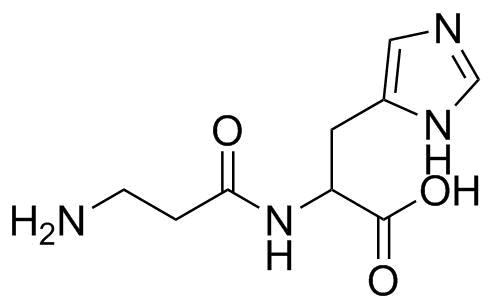 |
| Molecular Weight | ~13700 |
| CAS Registry Number | 9001-99-4 |
| EC Number | 232-646-6 |
| SMILES | C1=C(NC=N1)CC(C(=O)O)NC(=O)CCN |
| Melting point | 243 °C (dec.) |
|---|---|
| Hazard Classification | |||||||||||||||||||||
|---|---|---|---|---|---|---|---|---|---|---|---|---|---|---|---|---|---|---|---|---|---|
| |||||||||||||||||||||
| SDS | Available | ||||||||||||||||||||
 chemBlink Chemical Story
|
Ribonuclease A is a small, well-characterized enzyme that catalyzes the cleavage of RNA molecules. It belongs to the family of endoribonucleases and is one of the most extensively studied proteins in biochemistry due to its stability, relatively simple structure, and well-defined catalytic mechanism. Structurally, ribonuclease A is a single-chain polypeptide composed of approximately 124 amino acids. It folds into a compact, globular structure stabilized by multiple disulfide bonds between cysteine residues. These covalent disulfide linkages are essential for maintaining the enzyme’s structural integrity and contribute significantly to its remarkable thermal and chemical stability compared with many other enzymes. The enzyme’s three-dimensional structure consists primarily of a β-sheet-rich core with several short α-helices. The arrangement of these secondary structural elements creates a defined active site cleft where RNA binding and catalysis occur. The protein is highly compact, with a tightly packed hydrophobic interior and a surface enriched in polar and charged residues that interact with the aqueous environment and RNA substrates. The active site of ribonuclease A contains key catalytic residues, most notably two histidine residues (His12 and His119) that play central roles in the catalytic mechanism. These residues act as general acid and base catalysts during phosphodiester bond cleavage in RNA. A nearby lysine residue (Lys41) contributes to stabilization of the negatively charged transition state. The enzyme specifically recognizes single-stranded RNA and cleaves the phosphodiester bond on the 3′ side of pyrimidine nucleotides (cytosine and uracil). The reaction proceeds through a two-step transphosphorylation and hydrolysis mechanism, involving the formation of a cyclic 2′,3′-phosphate intermediate. In the first step, the 2′-hydroxyl group of the ribose sugar acts as a nucleophile, attacking the adjacent phosphorus atom of the RNA backbone. This step is facilitated by His12 acting as a general base, which abstracts a proton to activate the 2′-OH group. Concurrently, His119 acts as a general acid, protonating the leaving group oxygen to facilitate bond cleavage. The second step involves hydrolysis of the cyclic intermediate to yield a 3′-phosphate RNA product. In this step, the roles of the histidine residues are reversed, with His119 acting as a base and His12 acting as an acid, promoting water-mediated ring opening. Ribonuclease A is highly stable due to its compact folding and multiple disulfide bonds, which lock the protein into its active conformation. It can retain activity even after exposure to relatively harsh conditions, including elevated temperatures and partial denaturation, provided the disulfide bonds remain intact or are allowed to reform upon refolding. From a physicochemical perspective, the enzyme is soluble in aqueous environments and operates optimally under physiological pH conditions. Its surface contains numerous charged residues that facilitate interactions with the negatively charged phosphate backbone of RNA substrates. The enzyme does not require metal ions for catalytic activity, distinguishing it from many other nucleases that depend on divalent cations such as magnesium or manganese. Instead, its catalytic function relies entirely on amino acid side chains within the active site. Overall, ribonuclease A is a small, disulfide-stabilized ribonuclease enzyme that catalyzes the cleavage of RNA through a well-defined acid–base mechanism involving key histidine residues. Its structural simplicity, high stability, and clearly understood catalytic mechanism have made it a classic model system in enzymology and protein chemistry. References 2026. Nutrition's role in extending healthspan: CRN-international symposium report. European Journal of Nutrition. DOI: 10.1007/s00394-025-03860-1 2026. The 4Ps framework of nutritional strategies for optimal performance. Performance Nutrition. DOI: 10.1186/s44410-026-00022-0 2026. NMR-Based toxicometabolomics of Yellowtail Snapper (Ocyurus chrysurus) embryos, as a relevant ecological receptor, exposed to perfluorooctane sulfonate (PFOS). Ecotoxicology (London, England). DOI: 10.1007/s10646-026-03057-0 |
| Market Analysis Reports |