
Online Database of Chemicals from Around the World
| Beijing Hope International Pharmaceutical Technology Development Co., Ltd. | China | |||
|---|---|---|---|---|
 | www.hopelife.cn | |||
 | +86 (10) 6788-6402 | |||
 | +86 (10) 6788-7110 ex 8016 | |||
 | market@hopelife.cn andychina0528@hotmail.com | |||
| Chemical manufacturer | ||||
| chemBlink Standard supplier since 2007 | ||||
| Nanjing Finetech Chemical Co., Ltd. | China | |||
|---|---|---|---|---|
| www.fine-chemtech.com | |||
| +86 (25) 5207-8417 +86 17714198479 | |||
| +86 (25) 5207-8417 | |||
| sales@fine-chemtech.com | |||
 | QQ Chat | |||
| Chemical manufacturer since 2007 | ||||
| chemBlink Standard supplier since 2007 | ||||
| Huangshi Fuertai Pharmaceutical Tech Co., Ltd. | China | |||
|---|---|---|---|---|
| www.fuertaichem.com | |||
| +86 (714) 329-3168 ex 6022 +86 15172040684 | |||
| +86 (714) 639-2351 | |||
| info@fuertaichem.com | |||
| QQ Chat | |||
| Chemical manufacturer since 2013 | ||||
| chemBlink Standard supplier since 2007 | ||||
| Jinan Chenghui-Shuangda Chemical Co., Ltd. | China | |||
|---|---|---|---|---|
| www.jnchsd.com | |||
| +86 (531) 5889-7051 +86 15053146086 | |||
| +86 (531) 5889-7093 | |||
| jnchsd@qq.com | |||
| QQ Chat | |||
| Chemical manufacturer since 2002 | ||||
| chemBlink Standard supplier since 2007 | ||||
| Simagchem Corporation | China | |||
|---|---|---|---|---|
| www.simagchem.com | |||
| +86 13806087780 | |||
| +86 (592) 268-0237 | |||
| sale@simagchem.com | |||
| Chemical manufacturer since 2002 | ||||
| chemBlink Standard supplier since 2008 | ||||
| Shanghai C-Strong Co., Ltd. | China | |||
|---|---|---|---|---|
| www.c-strong.com | |||
| +86 (21) 6139-0128 | |||
| +86 (21) 6139-0131 | |||
| sales@c-strong.com | |||
| Chemical manufacturer | ||||
| chemBlink Standard supplier since 2009 | ||||
| Wilshire Technologies, Inc. | USA | |||
|---|---|---|---|---|
| www.wilshiretechnologies.com | |||
| +1 (609) 683-1117 | |||
| +1 (732) 274-0049 | |||
| Wilshire-info@evonik.com | |||
| Chemical manufacturer since 1997 | ||||
| chemBlink Standard supplier since 2010 | ||||
| Specpharms Scientific Research Limited | China | |||
|---|---|---|---|---|
| www.special-pharma.com | |||
| +86 (21) 3110-8820 | |||
| +86 (21) 6091-1270 ex 1570 | |||
| info@special-pharma.com | |||
| QQ Chat | |||
| Chemical manufacturer since 2013 | ||||
| chemBlink Standard supplier since 2013 | ||||
| Wuhan Jetide Biotech Co., Ltd. | China | |||
|---|---|---|---|---|
| www.huntide.com | |||
| +86 (27) 8778-1035 | |||
| +86 (27) 8778-1036 | |||
| sales@huntide.com | |||
| Chemical manufacturer since 2012 | ||||
| chemBlink Standard supplier since 2014 | ||||
| Pure Chemistry Scientific Inc | USA | |||
|---|---|---|---|---|
| www.purechems.com | |||
| +1 (888) 588-9418 | |||
| +1 (617) 206-9595 | |||
| sales@purechems.com | |||
| Chemical manufacturer since 2004 | ||||
| chemBlink Standard supplier since 2014 | ||||
| LEAPChem | China | |||
|---|---|---|---|---|
| www.leapchem.com | |||
| +86 (571) 8771-1850 | |||
| market19@leapchem.com | |||
| QQ Chat | |||
| Chemical manufacturer since 2006 | ||||
| chemBlink Standard supplier since 2015 | ||||
| Jetide Health Group | China | |||
|---|---|---|---|---|
| www.jetide.com | |||
| +86 (27) 8778-1035 | |||
| +86 (27) 8778-1036 | |||
| kiko@jetide.com | |||
| Chemical manufacturer since 2012 | ||||
| chemBlink Standard supplier since 2015 | ||||
| Nextpeptide Inc. | China | |||
|---|---|---|---|---|
| www.nextpeptide.com | |||
| +86 (571) 8161-2335 | |||
| sales@nextpeptide.com | |||
| Chemical distributor since 2017 | ||||
| chemBlink Standard supplier since 2017 | ||||
| Huangshi Bioche Pharmeutical Co., Ltd. | China | |||
|---|---|---|---|---|
| www.hbbioche.com | |||
| +86 (714) 328-4559 | |||
| +86 (714) 328-4555 | |||
| info@hbbioche.com | |||
| Chemical manufacturer since 2012 | ||||
| chemBlink Standard supplier since 2018 | ||||
| Neostar United (Changzhou) Industrial Co., Ltd. | China | |||
|---|---|---|---|---|
| www.neostarunited.com | |||
| +86 (519) 8555-7386 +86 18015025600 | |||
| +86 (519) 8555-7389 | |||
| marketing1@neostarunited.com | |||
| Chemical distributor since 2014 | ||||
| chemBlink Standard supplier since 2020 | ||||
| Shanghai PI Chemicals Ltd. | China | |||
|---|---|---|---|---|
| www.pipharm.com | |||
| +86 (21) 58953700 | |||
| +86 (21) 58953701 | |||
| sales@pipharm.com | |||
| Chemical distributor since 2007 | ||||
| chemBlink Standard supplier since 2026 | ||||
| Chemos GmbH & Co. KG | Germany | |||
|---|---|---|---|---|
| www.chemos.de | |||
| +49 871-966346-0 | |||
| +49 871-966346-13 | |||
| chemos@chemos.de | |||
| Chemical distributor | ||||
| Sinbond Industrial Co., Ltd. | China | |||
|---|---|---|---|---|
| www.sinbondpharm.com | |||
| +86 (531) 8703-8285 +86 13583181986 +44 (208) 242-5518 | |||
| +86 (531) 8703-8285 | |||
| cici1124@gmail.com | |||
| QQ Chat | |||
| Chemical manufacturer since 2014 | ||||
| Zaozhuang Chiral Pharmaceutical Chemicals Co., Ltd. | China | |||
|---|---|---|---|---|
| www.chiral.cn | |||
| +86 (632) 519-2770 | |||
| +86 (632) 519-2780 | |||
| chiral@chiral.cn | |||
| Chemical manufacturer | ||||
| Spectrum Chemical Mfg. Corp. | USA | |||
|---|---|---|---|---|
| www.spectrumchemical.com | |||
| +1 (310) 516-8000 | |||
| +1 (310) 516-7512 | |||
| sales@spectrumchemical.com | |||
| Chemical manufacturer | ||||
| Liaoning Chedom Pharmachem Co., Ltd. | China | |||
|---|---|---|---|---|
| www.haide-chem.com | |||
| +86 (414) 252-1668 252-1696 | |||
| +86 (414) 252-1696 | |||
| reser@haide-chem.com | |||
| Chemical manufacturer | ||||
| Shanghai Worldyang Chemical Co., Ltd. | China | |||
|---|---|---|---|---|
| www.worldyachem.com | |||
| +86 13651600618 +86 (21) 5679-5779 | |||
| +86 (21) 5679-5266 | |||
| sales7777@worldyachem.com | |||
| QQ Chat | |||
 | WeChat: 13651600618 | |||
 | WhatsApp:+86 13651600618 | |||
| Chemical manufacturer since 2012 | ||||
| Classification | Biochemical >> Amino acids and their derivatives >> Other protected amino acids |
|---|---|
| Name | Alanyl-glutamine |
| Synonyms | Ala-Gln; Glutamine-S |
| Molecular Structure | 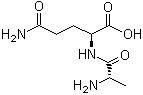 |
| Molecular Formula | C8H15N3O4 |
| Molecular Weight | 217.22 |
| Protein Sequence | AQ |
| CAS Registry Number | 39537-23-0 |
| EC Number | 609-717-9 |
| SMILES | C[C@@H](C(=O)N[C@@H](CCC(=O)N)C(=O)O)N |
| Density | 1.3±0.1 g/cm3 Calc.* |
|---|---|
| Melting point | 215 °C (Expl.) |
| Boiling point | 615.4±55.0 °C 760 mmHg (Calc.)* |
| Flash point | 326.0±31.5 °C (Calc.)* |
| Solubility | water: 100 mM (Expl.) |
| Index of refraction | 1.529 (Calc.)* |
| * | Calculated using Advanced Chemistry Development (ACD/Labs) Software. |
| Hazard Symbols |  GHS07 Warning Details |
|---|---|
| Risk Statements | H302-H315-H319-H335 Details |
| Safety Statements | P261-P305+P351+P338 Details |
| SDS | Available |
 chemBlink Chemical Story
|
L-Alanyl-L-glutamine packages two amino acids into a dipeptide with properties different from a simple mixture of the free components. Alanine supplies the N-terminal residue and glutamine the C-terminal residue. A peptide bond links alanine's carboxyl-derived carbonyl to glutamine's alpha amino nitrogen. Glutamine's side-chain amide remains present. The order matters: glutaminyl-alanine would place the free termini in a different structural context and would be a different compound, despite containing the same two amino-acid types. Its formula, C₈H₁₅N₃O₄, reflects the connection. Formally combining the two free amino-acid formulas and subtracting water gives the dipeptide composition. That bookkeeping explains why the mass of a dipeptide differs from the sum of the free amino acids. It also distinguishes the backbone peptide amide from the separate amide on glutamine's side chain. Three nitrogen atoms are present, but they are not three equivalent amino groups. The practical interest in cell culture begins with the limitations of free glutamine. In aqueous culture media it can progressively decompose, producing ammonia and a cyclic product commonly called pyroglutamic acid. A nutrient's nominal amount at preparation therefore need not equal its amount after storage or incubation. The dipeptide offers a more stable way to provide a glutamine-related source under suitable culture conditions. Stability of the supplied material, however, is only one part of the problem: cells must also be able to access the nutrient in that form. Christie and Butler investigated that question in a murine hybridoma system in 1994. They compared glutamine with glutamine-containing dipeptides, including alanyl-glutamine. Their experiments examined growth, metabolism and peptidase activity. The proposed utilization mechanism involved extracellular hydrolysis by peptidase activity associated with the cells. This is more informative than assuming that every cell necessarily transports the intact dipeptide in the same way. A culture can gain access to amino acids through enzymatic processing that depends on the particular biological system. The amount supplied also matters. A 1998 study by Atanassov and colleagues used microglial BV-2 cells to examine replacement of glutamine with alanyl-glutamine. Their work emphasized concentration optimization when reducing ammonia formation and supporting growth. Preventing spontaneous breakdown of the starting nutrient does not eliminate ammonia that can arise later from cellular metabolism. The feed formulation and what the cells do with it remain separate sources of the final medium composition. The comparison between alanyl-glutamine and glycyl-glutamine in the 1994 study also showed why all glutamine dipeptides should not be treated as one interchangeable ingredient. The authors found different apparent affinities of the measured peptidase activity for the two substrates. A shared glutamine residue therefore did not imply identical access to that residue. The chemical partner influences the substrate presented to an enzyme. That observation links a change of just one amino-acid residue to the practical interpretation of a culture experiment. These studies explain an established research use while preserving its limits. Results from one cell line and one formulation cannot guarantee the same growth or production response in every culture. Nor do cell-culture measurements establish a clinical benefit from administering the compound to people. The dipeptide's value in this setting lies in coordinating chemical stability with biological availability. Linking two amino acids changes how a nutrient is presented, and the experiments determine whether that change works for the cells being studied. A two-residue peptide can therefore be important not because it sends an elaborate biological signal, but because it changes the chemistry of the medium in which an experiment takes place. References: 1. LGC Standards. L-Alanyl-L-glutamine, CAS 39537-23-0, structural identity and analysis. https://assets.lgcstandards.com/sys-master%2Fpdfs%2Fhed%2Fh76%2F10723735732254%2FCOA_TRC-A511370-1G_ST-WB-CERT-6316795-1-1-1.PDF 2. Christie A, Butler M. Glutamine-based dipeptides are utilized in mammalian cell culture by extracellular hydrolysis catalyzed by a specific peptidase. J Biotechnol. 1994;37:277–290. https://pubmed.ncbi.nlm.nih.gov/7765576/ 3. Atanassov CL, Seiler N, Rebel G. Reduction of ammonia formation in cell cultures by L-alanyl-L-glutamine requires optimization of the dipeptide concentration. J Biotechnol. 1998;62:159–162. https://doi.org/10.1016/S0168-1656(98)00055-8 |
| Market Analysis Reports |